Saturday, June 22, 2013

anticlockwise milling and clockwise milling

Processing method of Tungsten Carbide End Mills – anticlockwise milling (up milling) and clockwise milling (down milling)

Milling is one of the most common and most widely used processing methods, and for roughing milling of the various structural components and fine milling is almost by end milling. There are two ways, clockwise and anticlockwise milling, according to the cutting direction. The movement of the cutting edge and work piece is in the opposite direction or same direction, divided into the two kinds of conventional milling and climb milling.

Anticlockwise Milling:

Milling direction and feed in the opposite direction (milling against the feed) is anticlockwise milling; chip caused from the bottom into upper, so we also call it as up milling; Since the traditional processing and milling mostly used this way, so we also called it as conventional milling.

Processing method of Tungsten Carbide End Mills – anticlockwise milling (up milling) and clockwise milling (down milling)

Characteristics of anticlockwise milling:

  1. Chip shape is from thin to thick, and cutter afford force from light into heavy, which may prevent the cutter fracture by the impact.
  2. Suitable for milling casting black surface.
  3. Can be used in the old milling machine, no screw invalid gap movement.
  4. More friction, the blade is easy to blunt, short life.
  5. Easy shaken, the machined surface is rough, poor machining accuracy.
  6. The device is not easy to settle, which is not suitable for milling thin parts.
  7. More energy consumption.

Clockwise milling:

The milling and feed in the same direction (milling with the feeds) called clockwise milling; Due to cutting action is from no-machining face of work piece into down place (chips from thick into thin), so it is called down milling or climb milling.

Processing method of Tungsten Carbide End Mills – anticlockwise milling (up milling) and clockwise milling (down milling)

Characteristics of climb milling:

  1. Chip is from thick into thin, cutter affords force from heavy into light, easy to cause fracture by impact.
  2. Not suitable for milling castings, forgings, and the surface of the work piece with fish scale shape.
  3. The milling machine shall have a gap eliminator, or easy to produce screw invalid gap movement.
  4. Processing less friction, longer life of the cutter edge.
  5. Easy chucking, no vibration, and high accuracy of the machined surface.
  6. The device is easy to settle, it’s suitable for milling long thin work pieces.
  7. Less feed consumption.
In most of the milling case, in addition to the casting of the first milling and old milling Lo-gap chopping device need to use the anticlockwise milling, down milling is better than conventional milling.

Tuesday, June 18, 2013

Cutting Reference Data for End Mills of Various Materials

Cutting Reference Data for End Mills of Various Materials
Effective working solution depends on correct cutters, operation method, and technology.
Usual cutting conditions and major influence factors of CNC machines.
Introduction Formula
Cutting Data V(m/min) Cutting speed is decided by the diameter of end mills and its rpm V=Cutting speed(m/min)
D=diameter(mm)
N=rpm of one min of end mills(min-1)
Feed speed F(mm/min) Feed speed is the speed of relative one of work piece. Feed rate per flute is important for multi-flute end mills. F=Feed speed per minute
z= number of flute
f= Feed volume per flute
Cutting depth a(mm) Cutting depth is the thickness of flute machining on work piece. We always increase cutting depth to achieve its efficiency, but it is too deep to short tool life. It’s better to give proper cutting depth per flute, don’t increase feed rate and cutting depth together. -- --
Feed rate per flue
f(mm/刃)
Once a flute to cut -- --
Cutting width b(mm) Vibration caused by diameter of end mill, width of work piece, flute numbers, and cutting width. -- --
Cutting Speed
Work Material High Speed Steel Carbide – rough cutting Carbide – fine cutting
Cast iron (soft) 32 50-60 120-150
Cast iron (hard) 24 30-60 75-100
Malleable cast iron 24 30-75 50-100
Steel (soft) 27 30-75 150
Steel (hard) 15 25 30
Aluminum alloy 150 95-300 300-1200
Yellow Steel (soft) 60 240 180
Yellow Steel (hard) 50 150 300
Bronze 50 75-150 150-240
Copper 50 150-240 240-300
Hard Rubber 60 240 450
Fiber 40 140 200
Feed volume each side
Working Material Face cutter End Mill Spiral flute flat
end mill
Side Cutter Milling Cutter Metal gap cutter
HSS Carbide HSS Carbide HSS Carbide HSS Carbide HSS Carbide HSS Carbide
Cast Iron HB150-180 0.4 0.5 0.2 0.25 0.32 0.4 0.23 0.3 0.13 0.15 0.10 0.13
HB180-220 0.32 0.4 0.18 0.2 0.25 0.32 0.18 0.25 0.1 0.13 0.08 0.1
HB220-300 0.28 0.3 0.15 0.15 0.20 0.25 0.15 0.18 0.08 0.1 0.08 0.08
Malleable cast iron, Cast iron 0.3 0.35 0.15 0.18 0.25 0.28 0.18 0.2 0.1 0.13 0.08 0.1
Carbon steel Cutting steel 0.3 0.4 0.15 0.2 0.25 0.32 0.18 0.18 0.23 0.13 0.08 0.1
Soft steel, Steel 0.25 0.35 0.13 0.18 0.20 0.28 0.15 0.2 0.08 0.1 0.08 0.1
Alloy Steel Annealing robust steel HB180-220 0.20 0.35 0.10 0.18 0.18 0.28 0.13 020 0.08 0.1 0.05 0.1
HB220-300 0.15 0.3 0.08 0.15 0.13 0.25 0.10 0.18 0.05 0.10 0.05 0.08
HB300-400 0.10 0.25 0.05 0.13 0.08 0.2 0.08 0.15 0.05 0.08 0.03 0.08
Stainless steel 0.15 0.25 0.08 0.13 0.13 0.20 0.10 0.15 0.05 0.08 0.05 0.08
Al-Mg Alloy 0.55 0.5 0.28 0.25 0.45 040 0.32 0.30 0.18 0.15 0.13 0.13
Brass, Bronze speedy cutting 0.55 0.5 0.28 0.25 0.45 0.4 0.32 0.3 0.18 0.15 0.13 0.13
ordinary 0.35 0.30 0.18 0.15 0.28 0.25 0.20 0.18 0.10 0.10 0.10 0.18
hard 0.23 0.25 0.13 0.13 0.18 0.2 0.15 0.15 0.08 0.08 0.05 0.08
Coppper 0.30 030 0.15 0.15 0.25 0.23 0.18 0.18 0.10 0.10 0.08 0.08
Plastics 0.32 0.38 0.18 0.18 0.25 0.30 0.20 0.23 0.10 0.13 0.08 0.10

Sunday, May 19, 2013

沖壓介紹

沖壓介紹 - 刀具及銑刀專家碧威刀具
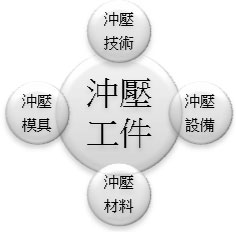
沖壓
沖壓介紹利用安裝在壓力機上的沖模對材料施加壓力,它是在常溫(冷態)下

Friday, April 19, 2013

鋁合金的加工切削特性

鋁合金的加工切削特性 - 刀具及銑刀專家碧威刀具

工業鋁合金零件的加工對刀具有很高的要求, 尤其是航空工業中的鋁合 金,刀具在具有高性價比的同時還必須滿足高質量加工的需求。由於整體 硬質合金刀具具有非常鋒利的切削刃和槽型,其在鋁合金精加工中切削力 小,並且具有容屑空間大,排屑順暢等優點,因此整體硬質合金刀具逐漸 取代了傳統的高速鋼刀具。

Friday, April 05, 2013

鋁合金介紹

鋁合金介紹 - 刀具及銑刀專家碧威刀具
以鋁為基的合金總稱。主要合金元素有Cu、Si、Mg、Sn,次要有鎳、鈦、鉻、鋰等。鋁合金密度低,塑性好可加工成型材,具有優良導電性、導熱性和抗腐蝕性, 添加一定 元素形成的合金在保持純鋁質輕等優點的同時還能具有較高的強度。 這樣使得其 “比強度”勝過很多合金鋼,成為理想的結構材料,廣泛用於機械製造、運輸 機械、動力機械及航空工業等方面,飛機的機身、蒙皮、壓氣機等常以鋁合金制 造,以減輕自重。採用鋁合金代替鋼板材料的焊接,結構重量可減輕50%以上。
鋁合金加工方式分類:按照加工方法分形變鋁合金和鑄造鋁合金。

Tuesday, March 19, 2013

The cutter materials and their contrast

The cutter materials and their contrast
This list includes eight cutter materials and their contrast as below:
  1. Mono Diamond)
  2. CO PCD
  3. Si PCD
  4. PCBN
  5. Si3N4
  6. SiC
  7. WC
  8. Steel
The cutter materials and their contrast
material Mono Diamond CO PCD si PCD PCBN Si3N4 SiC WC Steel
properties
Density g/cm3 3.52 3.8~4.10 3.4 4~4.20 3.2 3 15 7.8
Knoop Hadrness kg/mm2 6000~9000 5000~8000 5000 2700~3200 1800 2200 1500 560
Toughuess Mpam-2 3.4 6.1~8.9 6.9 4.1~7.2 6.4 4 11 46
Compression Strength Mpa 2000 7700 4200 3800 6800 7000 5400 1850
Tensile strength Mpa 2600 1300 600 500 470 400 1100 1760
Thermal Expansion 10-6/°C 0.8~4.8 1.5~3.8 3.8 3.5~4.2 3.5 3.8 4.3~5.6 11.2~14.3
Thermal Conductivity w/mk 600~1200 560 120 150 30 40 80 50
Friction   0.05~0.10 0.1 0.1 0.1 0.2 0.2 0.2 0.8

Monday, March 11, 2013

The cutting tool for hardening material above HRC50

tool-How to choose the cutting tool for hardening material above HRC50?
There are higher requirements and more difficulties for many hardened molds. Hence general carbide cutters cannot reach such request of accuracy. Therefore, it should pay more attention to selection of cutting tools for hardened material.

Since hardening material which HRC is above 50, with higher hardness, the carbide cutter is difficult to meet the processing requirements, it will cause badly wear even break after CNC machining for about ten minutes. General carbide cutters cannot reach the request accuracy because the hardened mold is with higher requirement and difficulty.

Some points for choosing cutters for machining hardened materials as below:

  1. Select super micro grain carbide rod and design high rigid tool body to ensure toughness and rigidity of the tool.
  2. Select the blade the design of the large helix angle ranging from sub-and four-blade design so that the cutters may reach radial beating with heavy cutting within high-speed and high hardness cutting.
  3. Choose carbide cutter with new crystal coating. PVD coating almost cannot be used in high hardness cutting.. the crystal coating may solve it basically about the high temperature / acid resistance / wear / and longer tool life.
  4. Cooperate with the powerful tool companies to get their further technical supports and tool configuration, reducing the procurement chain and purchasing costs.

Good carbide cutters with high rigidity of the tool body and new type coating may get high efficiency, precision, and longer tool life. From pre-hardened steel to hardened steel, during high-speed, and high efficient processing; from rough to high precision machining, to achieve a long life; high precision; high quality processing makes it is easier to proceed high-speed and high rigid machining.

Article reference source : NewMaker
qrcode

Bewise Inc., being a professional manufacturer of various cutting tools, is endeavoring to make excellent products. We are very experienced in custom-made tools, and good at solving customers’ problems when they meet difficulties and troubles. Through everlasting research and practices, we understand thoroughly about different materials of cutters and cutting tools.


BW's popular products for tool series including circular saw, carbide cutting tool, saw blade, wood saw blade, special tool,side milling cutter, …etc; For machines we have spiral tube cooler, cutter grinder, and the latest design and advanced powder forming machine / pelletizer. Bewise is a superior manufacturer and supplier of cutter production and machinery industry.

Monday, March 04, 2013

How to choose woodworking cutters?--part2

How to choose woodworking cutters?--part2
Selection of woodworking cutters
  1. identify the main technical parameters of the cutter
    Main parameters:outer diameter, machining thickness, and the center diameter.
    Other technical parameters: number of teeth, the direction of rotation, rotation speed, feed rate, clamping way, and cutter material.
  2. Choose the structure type of cutter
    According the request and characteristics of cutting object, and consideration from both the technical and economic aspects, select the whole cutters or welding cutters, assembly cutters, and combination cutter.
  3. The choice of the cutter rotation direction
    Cutter rotation direction is determined in accordance with the direction of rotation of the processing machinery spindle and the tool axis and the feed of the work piece relative position of the whole cutter, or assembling cutter, the inclination of the cutting blade relative to cutter radius determines the rotation of the cutter direction.
  4. Selection of cutting amount of end mills
    Cutting amount of end mills are including cutting speed, feed speed of work material, and depth of milling. Cutting speed depends on the rpm and the radius of the end mills .. feed rate depends on the requirements of cutting surface .. the surface roughness of work material largely depends on the feed rate per tooth during cutting process, too much feed will cause too rough surface of work piece; too small feed will cause burnt phenomenon on the surface, so the feed rate must be appropriate.
  5. Operation stability of end mills
    The stability of the cutter operation is to ensure that the basis of the machining accuracy and surface quality .. including two aspects: one is cutter excited vibration in machining due to external forces; the other is that cutter happens deformation by external forces.
  6. Safety of milling process
    The safety of the milling cutter includes the limitation of rotation speed, the limitation of chip thickness, height restrictions of molding cutter contour and the thickness of assembly cutter, and stretched limit.
    Cutting timber is characterized by high speed cutting, the rotation speed of the milling cutters mostly above 3000 rpm. High speed cutting for timber brings high productivity and smooth surface .., it also brings a series of security problems. Therefore, when the spindle speed up to 9000 rpm, besides the cutter which diameter smaller than 16mm, it should prohibit to use assembly cutters and do strict testing and inspection for welding cutter.
    It is necessary to limit chip thickness for avoiding overload of cutters. For end mills, the clamping method, cutter height, and thickness of work piece are with close relationship. When you ensure the thickness of work piece, mill diameter, and center diameter, the height of cutter reflects its own strength, stiffness, and capacity of cutting resistance. The height must be limited to ensure the safety of cutter usage.
    The design point of welding end mills is clamping problem. No matter the body is cylindrical or disc-type, the blade clamp form must be guaranteed to provide sufficient clamping force to resist rotation centrifugal force .
Reference sources – China Timber Net

Monday, February 25, 2013

航空材料與加工原則

航空材料與加工原則

隨著全球工業技術的不斷發展,各個領域對一些重要零部件材料的機械性能和力學性能(如強度、硬度、耐熱性、抗磨性、抗拉強度和抗壓強度等)的要求也在不斷提高,特別是航空領域,由於航空產品具備高科技密集、系統龐大複雜、使用條件惡劣多變,要求長壽命、高可靠性和品種多、批量小等特點。對金屬切削刀具及技術提出了更高的要求,難加工材料在人類各個領域的應用越來越廣泛。

航空材料特點:

  • 種類、品種、規格多
  • 高的比強度(σb/ρ)和高的比剛度(E/ρ)
  • 高溫合金是航空材料極其重要的組成部分
  • 質量要求高
  • 抗疲勞性能是航空材料的另一個突出特點
  • 成本高、價格貴

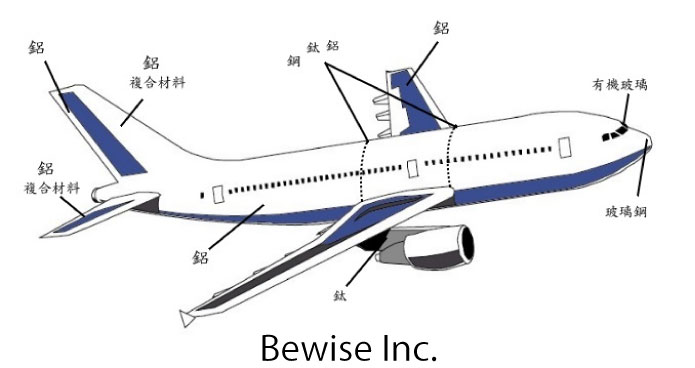
飛機材料:

難加工材料,如鎳基高溫合金、鈦合金、高強度結構鋼被現代航空產品大量採用,這些材料強度大、硬度高,耐衝擊、加工中容易硬化,切削溫度高、刀具磨損嚴重,屬難加工材料。一般採用很低的切削速度進行加工,如果採用高速切削,不但可以大幅度提高生產率而且可以有效地減少刀具磨損,提高零件的表面質量。

航空材料與加工原則

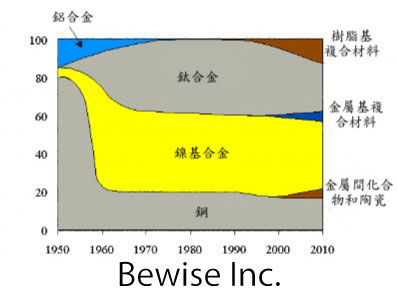
隨著航空發動機發展,各種材料再發動機中的用量不斷變化。

航空材料與加工原則

難切削材質切削加工原則

航空難加工材料有高溫合金、鈦合金、超高強度鋼、複合材料等。航空難加工材料加工的最突出問題是刀具磨損問題,直接影響加工效率和成本;此外加工質量也經常成為瓶頸。

難加工材料的有效加工:

資料來源:網路彙整
qrcode

碧威為專業的刀具,銑刀,鎢鋼,切削刀具製造商,致力於製造優秀的產品,在客製化刀具方面的經驗十分豐富,並擅於幫助客戶解決各式各樣之刀具切削面臨之問題,對各種刀具材質切削刀具鍍模都非常瞭解透徹,可選用常見的鎢鋼高速鋼或是近來詢問度極高的鑽石刀具

碧威銑刀熱門產品圓鋸片鎢鋼刀鋸片木工鋸片鎢鋼刀具側銑刀

機械類則有對刀具加工非常有幫助的冷風槍渦流管槍,並有最新設計和技術的粉末成型機

碧威是在刀具製造機械工具業界中具有足夠水準的製造供應商!

Tuesday, February 05, 2013

高熵合金(High Entropy Alloy)

高熵合金(High Entropy Alloy)

傳統合金都是在一種或兩種主要元素的基礎上加入合金元素從而得到性能不同的合金主,元素鮮少超過三個。如鐵基合金、鈷基合金、鋁基合金等,一種原子百分比大於50 % 的主要元素,目前為人類所用的傳統合金系統有30 多種。

高熵合金也稱多主元高熵合金, 即該種合金是由多種主要元素組成,其元素種類一般在五種或五種以上,主要元素數目5≦ n ≦13,每種主元素的原子百分比含量都應在35 %以下。與傳統合金相比,具有優良的性能。比如:耐高溫、耐腐蝕、高強度、高硬度等。可以這樣說,高熵合金的發現大大提高了合金的性能,與此同時,也擴大了金屬的選擇範圍。

高熵合金(High Entropy Alloy)

高熵合金特性:

目前的高熵合金的研究發現,高熵合金因為具有很高的合金熵,且原子不易擴散的性能,比較容易獲得熱力學穩定性高的固溶相以及納米結構,甚至非晶體結構。不同的合金顯示出不同的力學特性。

  • 高熵合金的強度高
  • 耐熱度很高,高熵合金亂度較大,1000℃退火12小時,不俱回火軟化
  • 抗腐蝕性強,易形成緻密的氧化膜及非晶質特性,有助於極佳耐腐蝕性
  • 高熵合金可以形成單一相的BCC或FCC結構相
  • 高熵合金熔化時在鑄態和完全回火態都會析出納米相結構甚至非晶質結構
  • 高硬度值,在鑄造狀態可達Hv800
  • 抗氧化性好,高溫退火後,表面仍俱有金屬光澤

高熵合金應用:

高熵合金具有高強度、高加工硬化耐高溫軟化、耐高溫氧化、耐磨性、耐腐蝕、高電阻率等性能,其特性優於傳統合金,應用層面多彩多姿。例如:模具、刀具刀具鍍層、高爾夫球頭打擊面、油壓氣壓杆、鋼管及輥壓筒的硬面、高頻變壓器、馬達的磁心、磁屏蔽、磁頭、磁盤、磁光盤、高頻軟磁薄膜;化學工廠、船艦的耐蝕高強度材料、超高大樓的耐火骨架…

資料來源:網路彙整